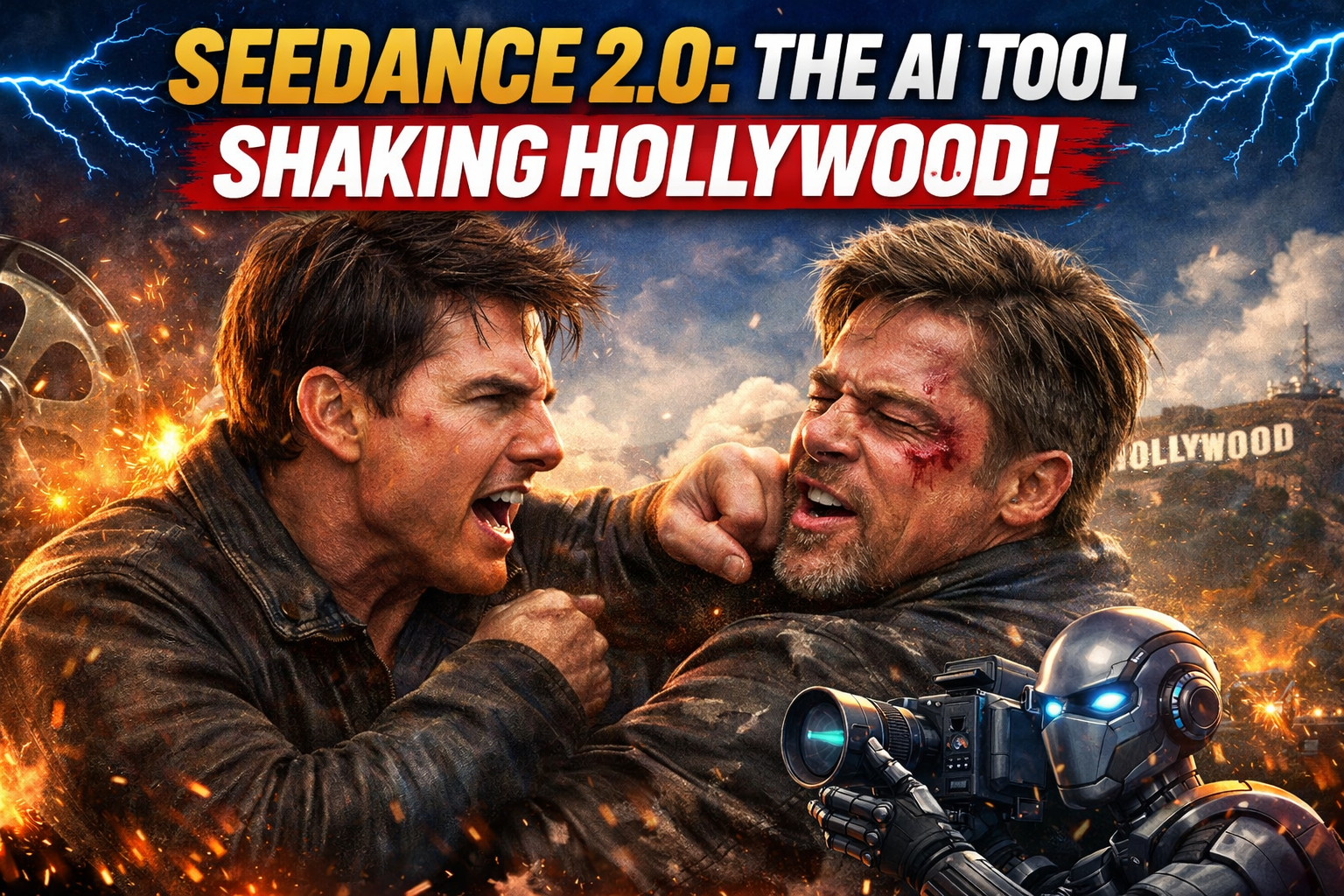
ByteDance has launched a new AI video tool called Seedance 2.0. It can create ultra-realistic 2K videos with clear visuals, smooth movement, and perfect lip-sync. What makes it special is that it can understand four types of input at the same time: text, images, audio, and video.
Soon after its launch in February 2026, Seedance 2.0 became viral. A short AI-generated clip showing digital versions of Tom Cruise and Brad Pitt fighting on a rooftop shocked the internet. The clip looked so real that many people could not believe it was made by AI. This has created serious legal and ethical questions in the entertainment industry.
What Happened?
The viral video was created by Irish filmmaker Ruairi Robinson using just a simple text prompt. The 15-second clip showed realistic digital versions of Brad Pitt and Tom Cruise fighting each other.
The most shocking part was not just the fight — it was the dialogue. The AI generated lip-synced speech where one character accused the other of killing Jeffrey Epstein. The voices, facial expressions, and movements looked extremely realistic.
This proved that AI video is no longer just experimental or funny — it can now look like a real Hollywood scene.
Why Are Studios Angry?
The Motion Picture Association (MPA), which represents major studios like Disney, Netflix, Paramount, and Warner Bros., accused Seedance 2.0 of using copyrighted movies and shows to train its AI model.
The MPA said ByteDance must immediately stop using copyrighted content without permission.
The actors’ union, SAG-AFTRA, also criticized the tool. They said it violates actors’ rights because their faces and voices were used without consent. This connects to something called the “Right of Publicity,” which means people have control over how their image and voice are used.
What Makes Seedance 2.0 Powerful?
Unlike older AI tools like Sora, Seedance 2.0 is “quad-modal.” This means it can combine:
- Text prompts
- Reference images (up to 9 images)
- Video clips
- Audio tracks (up to 3 audio files)
It can create 15-second videos in 2K resolution with smooth motion and consistent characters. Faces do not suddenly change between scenes. Clothes and backgrounds remain stable.
Reports say the AI was trained using data from Douyin, the Chinese version of TikTok. This may explain why it understands human movement and facial expressions so well.
Are Filmmakers Worried?
Yes. Some Hollywood writers and creators are scared.
Screenwriter Rhett Reese (known for Deadpool & Wolverine) said he feels “terrified” and believes that soon one person could create a full movie using just a computer.
However, not everyone agrees. Actor Simu Liu criticized the AI video, saying the fight physics looked unrealistic. Some writers also argue that while AI can copy styles, it still cannot replace human creativity and original ideas.
How Did ByteDance Respond?
ByteDance said it takes copyright issues seriously. After the backlash, the company suspended the feature that allowed users to upload images of real people. They also said the viral clip was created during a limited testing phase before the full launch.
Why This Matters
Seedance 2.0 shows that AI video technology is advancing very fast. It can now create realistic actors, voices, and scenes without permission.
This raises important questions:
- Who owns AI-generated content?
- Can AI be trained using copyrighted movies?
- Do actors have full control over their digital likeness?
- Will AI replace parts of Hollywood filmmaking?
Seedance 2.0 may be a turning point. AI is no longer just helping filmmakers — it may start competing with them.
The future of movies, actors, and studios could change faster than anyone expected.
Leave a Reply